
Tempered vs Laminated Glass: A Clear Guide for Your Singapore Home
Quick Answer
Laminated glass is made from two glass layers bonded to an interlayer, so cracked fragments tend to stay attached instead of falling away. For Singapore homes, it is especially useful for slim-profile doors, windows facing noise, and areas where stay-in-place break behaviour matters. WSS fits 6.38mm laminated glass as standard on slimness profile doors.
If you've ever gotten a glass quote in Singapore, you've probably seen the words "tempered" and "laminated" thrown around without much explanation. Both are considered safety glass. Both show up across homes here. But they're built differently, they break differently, and one usually shows up as the pricier line item on a quote.
Here's a clear walkthrough of the difference — what each one actually is, how they behave, and where each one tends to make sense.
What tempered glass actually is
Tempered (or toughened) glass starts as ordinary glass, then goes through a heat treatment process that puts the surface under compression. That treatment is what makes it several times stronger than untreated glass of the same thickness.
The trade-off shows up when it fails. Tempered glass is designed to break into small, blunt granules rather than long shards — that's the safety feature. But once it breaks, it breaks completely. There's no holding the opening together afterward.
It also can't be cut or drilled after the tempering process — any shaping has to happen before treatment. This is why tempered glass is common in shower screens, balustrades, table tops, and other spots where impact strength matters and a full breakage isn't a major concern.
What laminated glass actually is
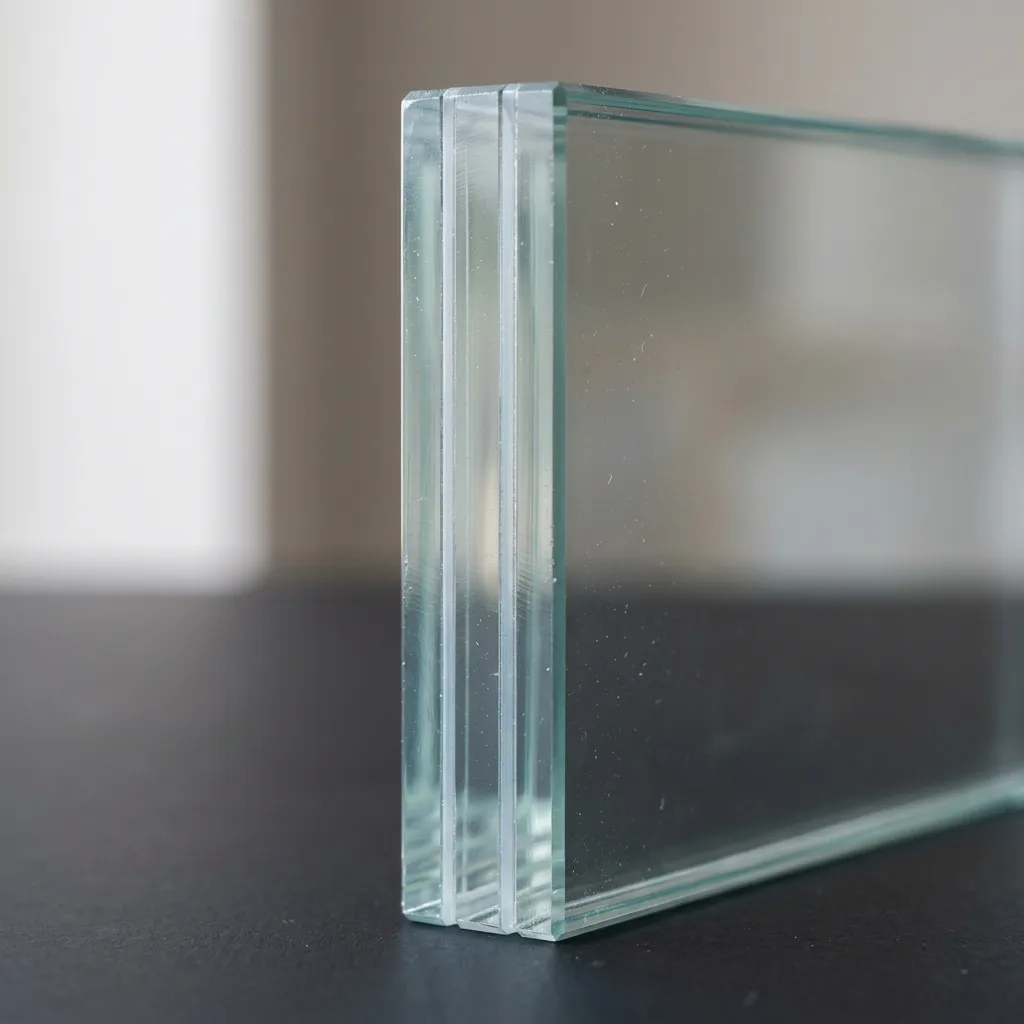
Laminated glass is built differently from the start. It's two (or more) layers of glass bonded to a plastic interlayer — almost always PVB (polyvinyl butyral) — under heat and pressure.
WSS's standard build is 3mm glass + 0.38mm PVB + 3mm glass, giving a finished 6.38mm pane.
The interlayer changes everything about how it fails. If laminated glass cracks, the fragments stay stuck to that plastic sheet instead of falling away. You can see this same effect in car windscreens, which are laminated for exactly this reason — a cracked windscreen stays in one piece instead of raining glass into the cabin.
That same interlayer also blocks a large share of UV transmission and noticeably reduces sound transmission compared to a single pane of tempered glass at the same thickness — which matters if your home faces a busy road, a construction site, or just gets a lot of midday sun.
Laminated Glass: What Singapore Homeowners Should Know
For Singapore homes, laminated glass is most useful when the opening is part of everyday living: balcony doors, slim-profile kitchen partitions, room dividers, and selected windows facing road noise or strong sun. The stay-in-place behaviour gives homeowners more reassurance than a pane that falls away completely after breaking.
It is also worth asking how laminated glass is priced. Some quotes list laminated glass as an upgrade over tempered glass. At WSS, 6.38mm laminated glass is already part of our slimness profile door specification, because we fabricate and glaze through our Singapore factory workflow instead of sending the job through a middleman.
The trade-off: cost
Building two glass plies with a bonded interlayer is a more involved process than tempering a single sheet, and that's reflected in price across the industry — laminated glass has typically carried a premium over tempered glass of similar thickness.
| Tempered | Laminated (6.38mm) | |
|---|---|---|
| Break behaviour | Shatters into small granules, falls away | Cracks but stays bonded to the interlayer |
| Sound insulation | Standard | Noticeably better at the same thickness |
| UV blocking | Minimal | Blocks a large share of UV |
| Typical market cost | Lower | Usually a premium over tempered |
Neither one is universally "better." They fail differently, and which failure mode you'd want depends on where the glass is going.
Where each one tends to make sense
Tempered glass is the common choice for shower screens, balustrades, and table tops — spots where strength matters most and a full breakage on impact is an acceptable outcome.
Laminated glass tends to make more sense for doors and windows where the stay-in-place behaviour, sound reduction, or UV blocking carries more weight — particularly slim-profile doors, which is where WSS comes in.
Slim sightline doors — the kind with barely-there frames — don't leave much room in the frame to work with. Most companies offering this slim look in laminated glass will quote it as an upgrade, because laminated glass usually costs more to source and process than tempered glass.
At WSS, 6.38mm laminated glass is the standard on our slimness profile doors. Not an add-on, not a quoted extra. Because we cut, build, and glaze everything ourselves at our Senoko factory, there's no middleman adding a markup before the glass reaches us. That saving passes straight through — so you get the quieter, sturdier, stays-in-place laminated glass for what other companies charge for plain tempered.
If a quotation elsewhere is cheaper for the "same" slimness door, it's worth asking what glass is actually behind the price.
For verification before you decide, review WSS's BCA and HDB credentials, customer reviews, and commercial project history. These proof pages help show who is fabricating, installing, and servicing the glass and aluminium work after handover.
Frequently asked questions
Is laminated glass required by law for Singapore homes?
Singapore's building and HDB guidelines call for safety glass — tempered or laminated — in certain spots, such as door panels and low-level glazing. Either type can satisfy this depending on where it's installed. Our team confirms the right spec for your home during quotation.
Can I still choose tempered glass if I prefer it?
Yes. WSS offers tempered glass across our regular window and door range. The 6.38mm laminated standard applies specifically to our slimness profile doors, where the acoustic and stay-in-place benefits matter most given the slim sightline.
Does laminated glass need any special cleaning?
No. Clean it the same way you'd clean any glass door — just avoid abrasive tools on the surface. The plastic interlayer is fully sealed between the glass plies and isn't exposed to water or cleaning agents.
Will laminated glass look any different from tempered glass?
Not really. Both are available clear, frosted, fluted, or tinted. The difference shows up in performance — noise, UV, break behaviour — not in everyday appearance.
Get a free quote
Tell us which door or window you're after, and we'll quote it with 6.38mm laminated glass already built in — not as a line-item extra.
Browse our slimness profile doors or WhatsApp us for a factory quote within 24 hours.